
Overwatered Succulent? Here’s Exactly How to Save It Before It’s Too Late
You bought a succulent because everyone online said they were “impossible to kill.”
Now the leaves are soft, yellow, falling apart, and your once-beautiful plant looks like it emotionally gave up overnight. Classic succulent experience. Humans keep treating desert plants like thirsty tropical queens and then act shocked when things turn swampy.
The truth is, overwatering is the number one reason succulents die indoors. But the good news? Your plant can often be saved if you catch the problem early enough.
If your succulent looks mushy, wrinkled, droopy, or suspiciously transparent, this guide will walk you through exactly what to do step by step without confusing gardening jargon or robotic advice that sounds written by a moisture sensor.
How to Know If Your Succulent Is Overwatered
An overwatered succulent usually looks soft and unhealthy rather than dry and crispy.
Many beginners assume wrinkled leaves mean the plant needs more water, but that’s where the disaster gets worse. Overwatered roots stop absorbing moisture properly, so the plant actually shows signs that look similar to dehydration. Plants are apparently committed to mixed signals too.
Here are the biggest warning signs:
Signs Your Succulent Has Too Much Water
- Mushy or squishy leaves
- Yellow, translucent, or pale leaves
- Leaves dropping with the slightest touch
- Black spots on the stem
- Wet soil that never dries
- A soft or rotting base
- Moldy smell coming from the pot
- Stem turning black near the roots
Healthy succulent leaves should feel firm and plump, not like a soggy cucumber left in the fridge drawer for two weeks.
Why Overwatering Happens So Easily Indoors
Succulents evolved in dry desert climates where heavy rain is rare. Their thick leaves store water for long periods, which means they actually prefer being ignored most of the time.
Indoors, though, several things work against them.
Watering Too Frequently
Most people water succulents on a schedule instead of checking the soil first. Weekly watering is often way too much, especially in cooler months.
Pots Without Drainage
Decorative pots may look beautiful on Pinterest, but if water has nowhere to escape, roots sit in moisture and slowly rot.
Wrong Soil Mix
Regular potting soil holds water for too long. Succulents need gritty, fast-draining soil that dries quickly.
Not Enough Sunlight
Low light slows down evaporation, meaning the soil stays wet much longer than expected.
So the plant ends up sitting in damp soil for days while quietly plotting its own collapse.
Exactly How to Save an Overwatered Succulent
If your succulent still has healthy leaves or part of the stem looks firm, there’s a strong chance you can recover it.
The key is acting quickly before root rot spreads further.
Step 1: Stop Watering Immediately
This is the first and most important step.
Do not “balance it out” with sunlight or give smaller amounts of water. Just stop watering completely.
Even if the leaves look wrinkled.
Even if the soil surface appears dry.
Even if your instincts are screaming otherwise.
Trust the process for once. Humanity rarely does.
Step 2: Remove the Plant From the Pot
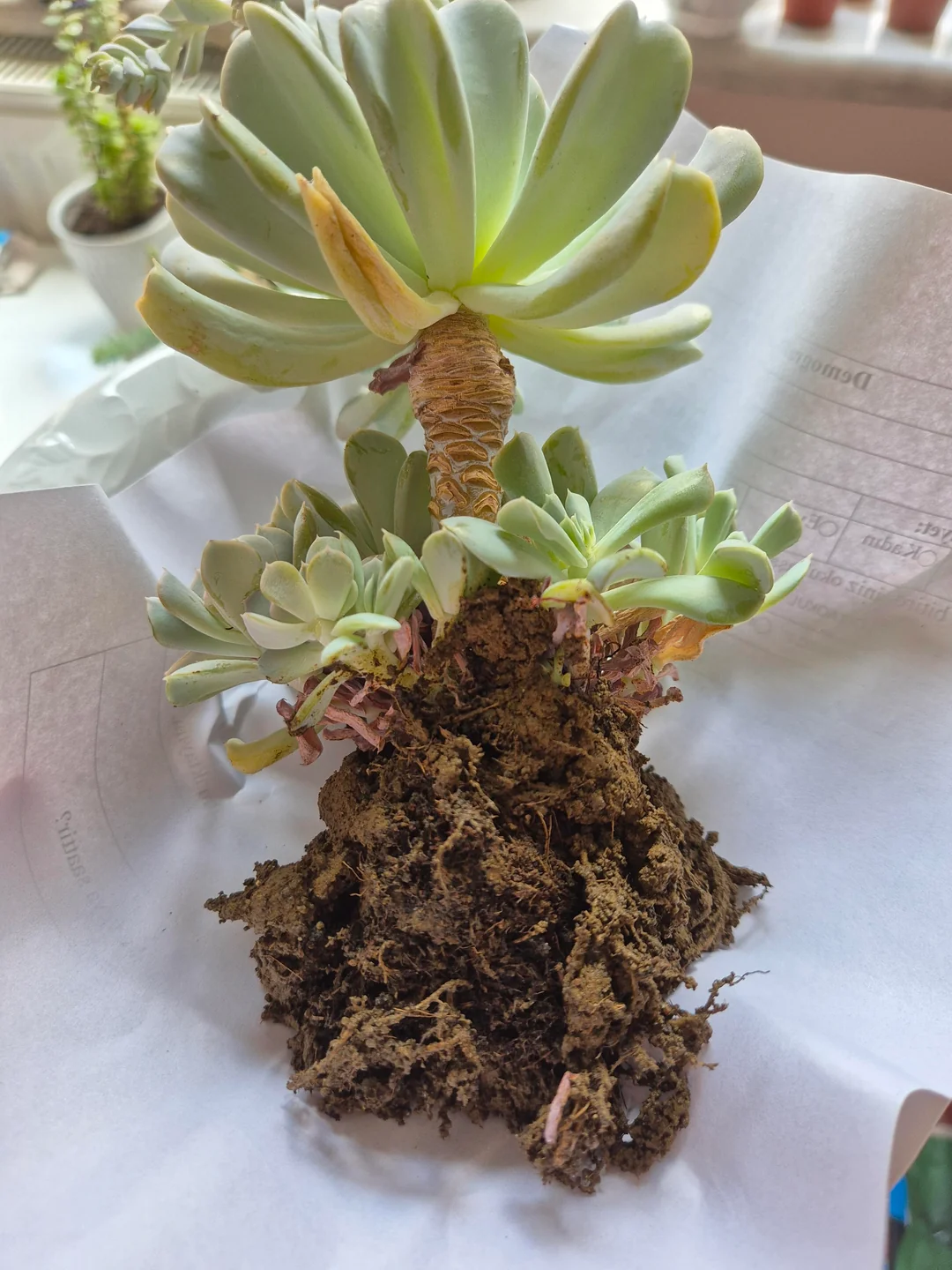
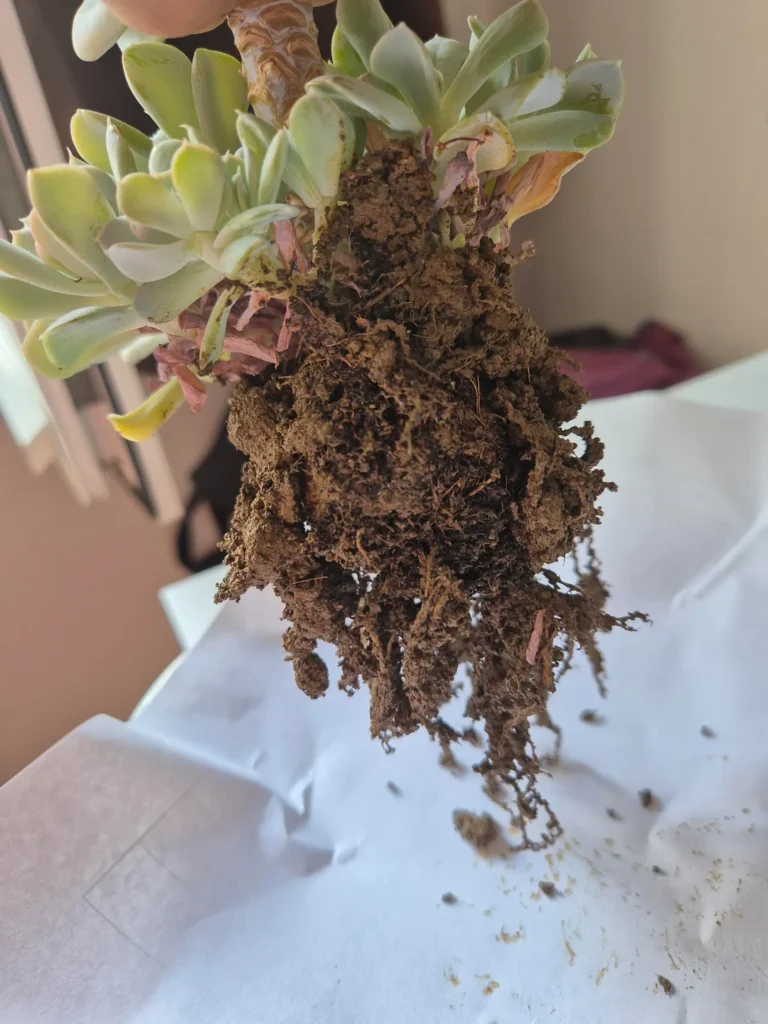
Carefully slide the succulent out of its pot and inspect the roots.
Healthy roots are:
- White
- Firm
- Dry-looking
Rotten roots are:
- Brown or black
- Slimy
- Soft
- Smelly
If the bottom of the stem is black and mushy, root rot has likely started spreading upward.
At this point, don’t panic. Succulents are surprisingly resilient when given a second chance and less affection.
Step 3: Cut Away All Rotten Parts
Using clean scissors or pruning shears, remove every black, mushy, or slimy root.
Be ruthless here.
Leaving even a small rotten section behind can continue spreading bacteria and fungus through the plant.
If part of the stem is rotting, cut above the damaged area until the inside looks fresh and healthy.
You want clean, firm tissue only.
Step 4: Let the Succulent Dry Completely
This step is where many people fail because they get impatient.
After trimming the damaged roots, place the plant somewhere dry with indirect sunlight for 24 to 48 hours.
This allows the cuts to callous over before repotting.
Think of it like letting a wound heal before exposing it to moisture again. Tiny cactus surgery. An unexpectedly dramatic hobby.
Step 5: Repot Using Dry Succulent Soil
Choose a cactus or succulent mix with excellent drainage.
You can also improve drainage by mixing in:
- Perlite
- Pumice
- Coarse sand
Use a pot with drainage holes, preferably terracotta since it absorbs excess moisture naturally.
Avoid oversized pots because they trap extra moisture around the roots.
Your succulent does not need a luxury apartment. It needs airflow and emotional distance.
Step 6: Wait Before Watering Again
This part feels wrong, but it matters.
Do not water immediately after repotting.
Wait at least 5 to 7 days before lightly watering the soil. This gives damaged roots time to heal instead of instantly rotting again.
After that, only water when the soil becomes fully dry.
- Not “slightly damp.”
- Not “mostly dry.”
- Actually dry.
What If the Roots Are Completely Dead?
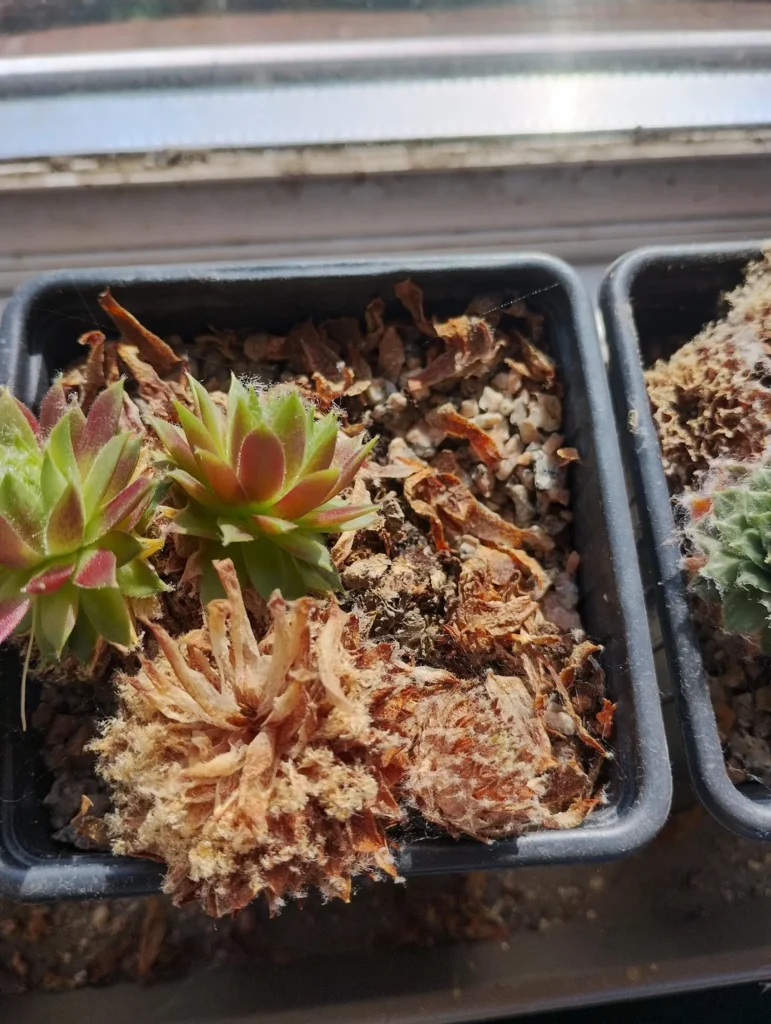
If all the roots are rotten, the plant may still survive through propagation.
Many succulents can regrow from healthy leaves or stem cuttings, which honestly feels unfair to every other houseplant.
How to Propagate a Dying Succulent
- Cut off healthy leaves or stem pieces
- Let them dry for 1 to 2 days
- Place them on dry succulent soil
- Keep in bright indirect light
- Wait for tiny roots and baby plants to appear
It takes patience, but it works surprisingly often.
How Long Does Recovery Take?
A mildly overwatered succulent may recover within a couple of weeks.
Severe cases involving root rot can take over a month before showing healthy new growth.
During recovery:
- Avoid fertilizing
- Avoid frequent watering
- Give bright indirect sunlight
- Watch for new healthy leaves
Recovery is slow because plants do not panic productively. They simply sit there looking suspicious while healing.
How to Prevent Overwatering Forever
Once you kill one succulent this way, you usually never repeat the mistake. Growth through plant trauma. Beautiful system.
Here’s how to avoid the problem in the future:
Always Check Soil Before Watering
Stick your finger deep into the soil.
If moisture remains, wait.
Use Fast-Draining Soil
Succulents hate dense, soggy mixes.
Prioritize Sunlight
More light helps the soil dry faster and keeps growth healthy.
Use Pots With Drainage Holes
No drainage hole = danger.
No matter how aesthetic the pot looks.
Water Deeply But Infrequently
When you do water:
- Soak the soil thoroughly
- Let excess water drain completely
- Don’t water again until fully dry
Succulents prefer rare heavy drinks over constant tiny sips.
How to Prevent Overwatering Your Succulents in the Future
Saving an overwatered succulent is a great feeling, but preventing the problem in the first place is even better. Most cases of root rot and mushy leaves happen because of well-intentioned care. Many plant owners believe frequent watering equals a healthy plant, but succulents actually thrive when they’re allowed to dry out between waterings.
The secret isn’t watering on a schedule—it’s learning to water based on your plant’s needs.
Follow these simple habits to keep your succulents healthy year-round:
- Check the soil before watering. Never water just because it’s been a week. Insert your finger 2–3 inches into the soil or use a moisture meter. If the soil is still damp, wait a few more days.
- Choose fast-draining soil. A quality cactus or succulent mix prevents water from sitting around the roots for too long. Good drainage is one of the best defenses against overwatering.
- Always use pots with drainage holes. Decorative containers without drainage may look beautiful, but trapped water can quickly lead to root rot. Excess water should always have a way to escape.
- Adjust your watering routine with the seasons. During spring and summer, succulents actively grow and may need water more often. In fall and winter, growth slows dramatically, so watering should be reduced.
- Give your plant enough light. Succulents growing in bright light use water more efficiently than those kept in dim corners. Low-light conditions cause soil to stay wet much longer, increasing the risk of overwatering.
- Avoid watering small amounts frequently. Light, frequent watering only wets the surface of the soil and encourages shallow roots. Instead, water deeply, then allow the soil to dry completely before watering again.
- Keep an eye on your plant’s leaves. Firm, plump leaves usually indicate a healthy succulent. If they begin feeling soft, translucent, or unusually swollen, check the roots and soil moisture immediately.
Remember that every home has different growing conditions. Temperature, humidity, sunlight, pot size, and airflow all affect how quickly soil dries. Instead of relying on a fixed calendar, observe your succulent regularly and let it tell you when it needs water.
With the right soil, proper drainage, and a little patience, your succulent can recover from overwatering and continue growing beautifully. Developing these simple habits will not only prevent future problems but also help your plants develop stronger roots, healthier leaves, and a longer lifespan. A few mindful changes today can save you from dealing with overwatering again and keep your indoor succulent collection thriving for years to come.
Final Thoughts
An overwatered succulent may look dramatic, but it’s often recoverable with the right steps and a little patience.
The biggest mistake people make is trying to “fix” the problem by doing more. More water. More attention. More panic.
Usually the solution is the opposite:
- Stop watering
- Remove rot
- Let the plant dry
- Repot properly
- Leave it alone for a while
Succulents thrive when you stop hovering over them constantly. A survival philosophy that would probably improve half of human relationships too.

Sophie Bennett
Sophie Bennett is a Plant lover, chronic propagator, and firm believer that every room needs at least one Monstera. She writes about plant care, styling, and the joy of bringing the outdoors in keeping it honest, simple, and always beginner friendly.
Sophie Bennett
Sophie Bennett is a Plant lover, chronic propagator, and firm believer that every room needs at least one Monstera. She writes about plant care, styling, and the joy of bringing the outdoors in keeping it honest, simple, and always beginner friendly.
Get more inspiration
Subscribe for weekly plant care tips, grow guides, and fresh inspiration delivered straight to your inbox.