
Fungus Gnats Indoor Plants: 7 Fast Ways to Get Rid of Them
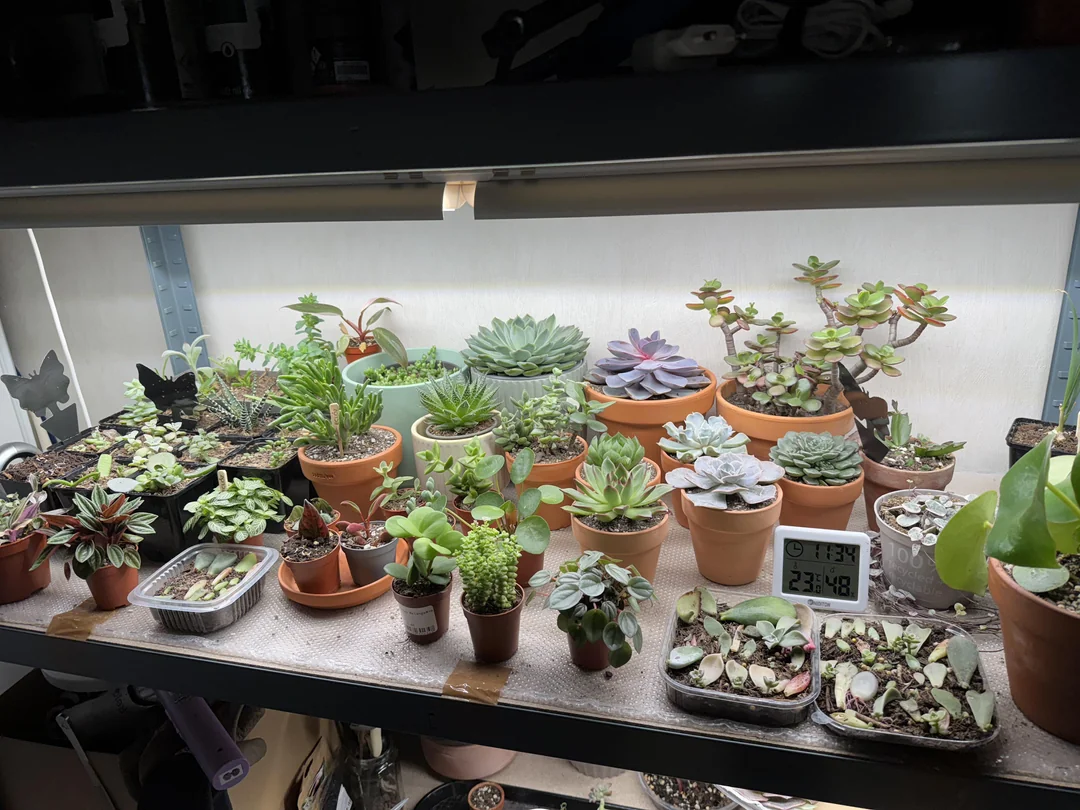
If tiny black flies are constantly hovering around your houseplants, you’re probably dealing with fungus gnats indoor plants often attract when the potting soil stays consistently moist. The good news is that you don’t have to throw away your plants. By reducing excess moisture, trapping adult gnats, and targeting larvae in the soil, you can break the infestation cycle and keep them from coming back.
How to Get Rid of Fungus Gnats in Indoor Plants
Few things are more annoying than watering your plants and suddenly seeing tiny black insects flying out of the soil. They hover around your pots, land on nearby surfaces, and somehow seem to appear again just when you think you’ve gotten rid of them. These are often fungus gnats.
Fungus gnats are small, mosquito-like insects commonly associated with moist potting soil. Adult gnats are mostly a nuisance, but the larvae live in the soil and feed on organic matter, fungi, and, in some situations, delicate plant roots. That’s why simply killing the flying adults doesn’t always solve the problem.
If you’re dealing with fungus gnats indoor plants are likely providing exactly what these pests need: moist soil, organic material, and a protected environment for eggs and larvae to develop.
The key is to treat both sides of the problem.
You need to reduce the conditions that encourage larvae while also catching the adult gnats before they reproduce again.
Why Are Fungus Gnats Appearing in Your Houseplants?
Fungus gnats don’t usually appear because your plant is unhealthy.
They’re attracted primarily to moist growing conditions.
If the soil stays wet for long periods, it creates an environment where fungus gnats can thrive. Organic matter in the potting mix can also provide food for developing larvae.
This means you can have a perfectly healthy-looking plant and still have a fungus gnat problem. The issue often becomes worse when indoor plants are watered on a fixed schedule rather than according to their actual moisture needs. For example, watering every few days may be completely unnecessary for a plant growing in a low-light room. If the soil never has a chance to dry appropriately, it can become an ideal breeding environment.
So before reaching for a pesticide, take a look at your watering habits. The soil itself may be the reason the gnats keep returning.
7 Effective Ways to Get Rid of Fungus Gnats
Getting rid of fungus gnats usually requires more than one step. Adult gnats can be caught relatively easily, but eggs and larvae hidden in the soil can continue the infestation.
The following approach tackles the problem from multiple angles.
1. Let the Soil Dry Between Waterings
The first thing to change is your watering routine.
Fungus gnats love consistently damp soil. Allowing the appropriate portion of the potting mix to dry between waterings makes the environment less attractive to them.
This doesn’t mean letting every houseplant become completely bone dry. Different plants have different moisture requirements. Succulents and drought-tolerant plants can generally tolerate much drier conditions than moisture-loving tropical plants. The goal is to avoid keeping the soil unnecessarily wet.
Before watering, check the soil with your finger or use another reliable way to assess moisture.
If the soil is still damp, wait. This single change can make a major difference over time.
2. Use Yellow Sticky Traps
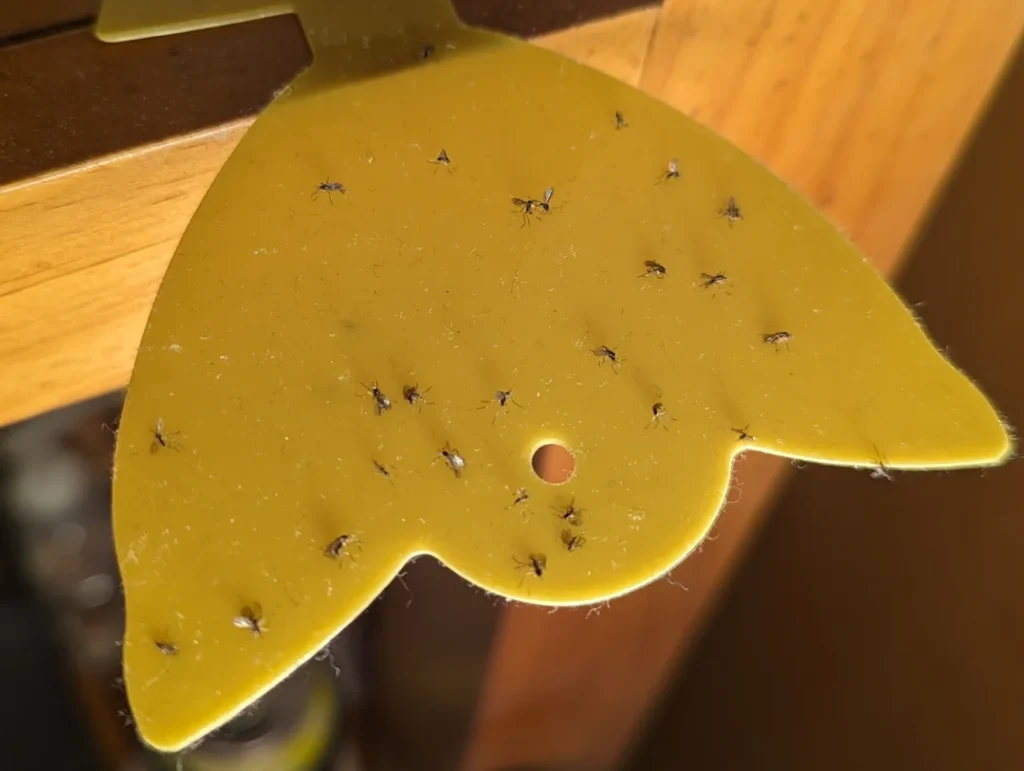
Yellow sticky traps are one of the easiest ways to reduce adult fungus gnats.
Place them near the affected plants, preferably close to the soil surface.
Adult gnats are attracted to the traps and become stuck on the adhesive surface.
Sticky traps are particularly useful because they also help you monitor the severity of the infestation.
If the trap quickly becomes covered with gnats, you know adult activity is still high. However, don’t make the mistake of assuming sticky traps solve everything. They primarily target adult insects. Larvae can still remain in the soil, so you need to address the conditions that allow the next generation to develop.
3. Improve Drainage
If your potting soil stays wet for a very long time, drainage may be part of the problem.
Make sure your container has adequate drainage holes.
Check that excess water can actually escape after watering.
A dense, compacted potting mix can also hold more moisture than your plant needs.
Using a suitable, well-draining potting mix can help excess moisture move away from the root zone more effectively. Also check the saucer underneath your pot. Don’t allow the container to sit in standing water after watering. Good drainage helps your plant’s roots while making the growing environment less appealing to fungus gnats.
4. Remove Dead Leaves and Organic Debris
Fallen leaves, dead roots, and other decaying organic material can accumulate around the surface of the soil.
Keep the top of your plant’s container relatively clean.
Remove dead leaves that have fallen onto the soil and clear away obvious debris.
This won’t eliminate an established infestation by itself, but it helps reduce the material that can contribute to fungal growth and creates a cleaner growing environment. It also makes it easier to inspect the soil and notice changes early.
5. Avoid Watering on a Fixed Schedule
One of the easiest ways to encourage fungus gnats is to water simply because it’s “watering day.”
Your plants don’t know what day it is. Their water requirements change depending on light, temperature, humidity, plant size, pot size, and the season. A plant in bright light may use water much faster than the same plant sitting in a dim room.
Instead of automatically watering every week, check the soil first. If it’s appropriately dry for that particular plant, water thoroughly.
If it’s still damp, wait. This simple habit can prevent many recurring fungus gnat problems.
6. Target the Larvae in the Soil
If you’ve reduced watering and trapped adult gnats but the infestation continues, larvae may still be developing in the potting mix.
This is when targeting the soil becomes important.
There are several approaches gardeners use for fungus gnat larvae, including biological controls and products specifically labeled for use against soil-dwelling larvae.
One well-known biological option is Bacillus thuringiensis israelensis (BTI), a naturally occurring bacterium used in certain products to target mosquito and fungus gnat larvae. Always follow the label instructions for any product you use, particularly around indoor plants.
The important point is that adult traps and soil treatment work differently. One deals with flying adults. The other targets the immature stage.
7. Quarantine Infested Plants
If one plant has a serious fungus gnat infestation, don’t immediately assume the others are unaffected.
Move the affected plant away from nearby houseplants if possible.
Then inspect the surrounding pots.
Look for adult gnats flying around the soil surface and check whether other containers are consistently moist.
Treating only one plant while several nearby pots remain wet can allow the infestation to continue spreading.
Quarantine is especially useful when you’ve recently brought home a new plant.
New plants can occasionally introduce pests into an otherwise healthy indoor collection.
Fungus Gnats vs. Other Tiny Houseplant Pests
Not every tiny insect around your plants is a fungus gnat.
Fungus gnats are typically small, dark, delicate-looking flies that often hover around the soil.
They are especially noticeable when you disturb or water the potting mix.
Other pests may live primarily on the leaves or stems.
If you’re seeing tiny insects crawling across foliage, sticky residue, webbing, or distorted leaves, you may be dealing with a different pest.
Identifying the insect correctly matters because the treatment can vary.
When in doubt, inspect the soil and foliage separately.
Where are the insects concentrated?
Are they flying from the soil?
Are they crawling on leaves?
Are there larvae in the growing medium?
These clues can help narrow down the problem.
Quick Fungus Gnat Diagnosis Table
| What You Notice | Likely Problem | Best First Step |
|---|---|---|
| Tiny black flies near soil | Adult fungus gnats | Yellow sticky traps |
| Gnats return after trapping | Larvae remain in soil | Address soil moisture |
| Soil stays wet for days | Excess moisture | Adjust watering and drainage |
| Gnats across several plants | Widespread infestation | Inspect and treat all affected pots |
| Dead leaves on soil | Organic debris | Remove plant debris |
| Plant wilting despite wet soil | Possible root stress | Check drainage and roots |
| Gnats after buying a new plant | Possible introduction | Isolate new plant |
How Long Does It Take to Get Rid of Fungus Gnats?
Don’t expect an infestation to disappear overnight.
Adult gnats may be reduced relatively quickly with traps, but eggs and larvae can continue developing in the soil.
That’s why consistency matters.
Continue monitoring the sticky traps and keep your watering routine under control.
If you’re treating larvae, follow the recommended application schedule on the product label rather than assuming one treatment will eliminate every stage.
The goal isn’t simply to kill today’s adult gnats.
You want to interrupt the entire life cycle.
As fewer adults reproduce and fewer larvae survive, the population should gradually decline.
The Biggest Mistake That Keeps Fungus Gnats Coming Back
If you keep dealing with fungus gnats every few weeks, look at your watering routine.
Many plant owners treat the insects but never address the environment that attracted them.
They put out traps, catch dozens of adults, and then continue keeping the soil constantly wet.
Eventually, another generation appears.
This creates a frustrating cycle.
The better approach is to combine adult control with moisture management.
Let the soil dry appropriately.
Improve drainage.
Remove dead organic material.
Monitor your plants.
Then use traps and, when appropriate, a treatment designed to target larvae.
You don’t need to create an extremely dry environment for every plant.
You simply need to stop watering more than the plant actually requires.
Can You Prevent Fungus Gnats From Returning?
Yes, prevention is much easier once you understand what attracts them.
Start by checking new plants before bringing them close to your existing collection.
Inspect the soil surface and foliage for insects.
Don’t immediately place a newly purchased plant beside dozens of established houseplants.
Good watering habits also matter.
Learn how quickly each plant’s soil dries and adjust your routine accordingly.
Use containers with drainage holes and avoid letting excess water collect underneath your pots.
Keep dead leaves and debris out of the growing medium.
Finally, keep an eye on your plants.
If you spot one or two fungus gnats early, it’s much easier to respond than when dozens are flying around your home.
Frequently Asked Questions
Are fungus gnats harmful to indoor plants?
Adult fungus gnats are mainly a nuisance, while their larvae live in the soil and feed on organic material and fungi. Heavy infestations can sometimes damage delicate roots, particularly in young plants.
Why do I keep getting fungus gnats in my houseplants?
The most common reason is consistently moist potting soil. Overwatering and poor drainage create conditions that fungus gnats prefer.
Do fungus gnats mean I’m overwatering?
Not necessarily, but consistently wet soil is a major factor. Check how quickly your plant’s potting mix dries before watering again.
Will yellow sticky traps get rid of fungus gnats?
Sticky traps are effective for catching adult gnats, but they don’t eliminate larvae living in the soil. Combine traps with moisture management and appropriate larval control when needed.
Can fungus gnats live in dry soil?
They prefer moist conditions, and allowing suitable plants’ soil to dry between waterings can make the environment less favorable for them.
Should I throw away a plant with fungus gnats?
Usually not. Most infestations can be managed without discarding the plant. Start by correcting moisture conditions and treating both adult and immature stages as appropriate.
Can fungus gnats spread from one plant to another?
Yes. Adult gnats can move between nearby containers, especially when several plants have consistently moist soil.
How can I stop fungus gnats from returning?
Avoid unnecessary watering, improve drainage, remove decaying debris, inspect new plants, and monitor the soil regularly.
Final Thoughts
Finding fungus gnats indoor plants attract can be incredibly frustrating, especially when you’ve already tried catching the flying insects and they somehow keep coming back.
The key is to stop treating the adult gnats as the entire problem.
Those tiny flies are only one stage of the life cycle. If larvae are still developing in damp potting soil, the next generation can continue appearing even after you’ve caught many adults. That’s why the most effective approach starts with your plant’s growing conditions.
Check how often you’re watering. Look at how quickly the soil dries. Make sure your pots drain properly, and remove dead leaves and organic debris from the surface. Then use yellow sticky traps to monitor and reduce adult activity.
If the infestation is persistent, consider an appropriate treatment for larvae and follow the product directions carefully. Most importantly, don’t panic and throw away your plants at the first sight of a tiny black fly. Fungus gnats are a common indoor plant pest, and with consistent care, they can usually be brought under control. Once you create a less favorable environment and interrupt their breeding cycle, the number of gnats should gradually decline.
Stop feeding the problem with constantly wet soil, target the adults and larvae, and your indoor plant collection can finally become fungus-gnat free.

Sophie Bennett
Sophie Bennett is a Plant lover, chronic propagator, and firm believer that every room needs at least one Monstera. She writes about plant care, styling, and the joy of bringing the outdoors in keeping it honest, simple, and always beginner friendly.
Sophie Bennett
Sophie Bennett is a Plant lover, chronic propagator, and firm believer that every room needs at least one Monstera. She writes about plant care, styling, and the joy of bringing the outdoors in keeping it honest, simple, and always beginner friendly.
Get more inspiration
Subscribe for weekly plant care tips, grow guides, and fresh inspiration delivered straight to your inbox.