
How to Repot Snake Plant Without Damaging the Roots? 5 Easy Steps
Quick Summary:
Learn how to repot snake plant: repot only when it is visibly root-bound- roots circling tightly, pushing the pot apart, or growing out of the drainage hole. Choose a pot just one to two inches wider than the current one, use fresh fast-draining mix, and handle the dense root ball gently, since snake plant roots are thick and do not like rough handling. Spring or early summer is the best time, and waiting about a week before watering lets any disturbed roots settle.
How to Report Snake Plant? Look for Signs
How to report snake plant is an important question, and it likes to be snug, so they rarely need a bigger home. The New York Botanical Garden notes that they are happy root bound and can stay in one pot for several years, so repot once the plant is close to bursting its container. Look for these signs:
- Roots visibly circling the inside of the pot or growing through the drainage hole.
- The plant tips over easily because it is top heavy for its pot.
- Water runs straight through without the soil absorbing it.
- The pot has visibly cracked or bulged from root pressure.
Not sure? Slide the plant partway out of its pot. If the root ball holds the pot’s shape with little visible soil, it is root bound. If you see plenty of soil, wait a while longer.
If none of these apply, leave the plant alone. Repotting a healthy snake plant too often only adds stress. For everything else it needs between repots, see our snake plant care guide.
When Is the Best Time to Repot a Snake Plant?
Spring or early summer is best, because the plant is actively growing and recovers faster. Savvy Gardening points to late winter or early spring and adds that a plant in real trouble should not wait. Avoid deep winter, when the plant is dormant, unless it is in distress, for example with a cracked pot or rotting roots.
What Do You Need Before You Start?
- A pot one to two inches wider than the current one, with at least one drainage hole.
- Fresh, fast draining mix, such as a cactus or succulent blend with extra perlite or coarse sand if it feels dense.
- A drop cloth, gloves, and a trowel to keep the mess contained.
- Clean scissors or pruning shears for trimming any damaged roots.
Skip heavy garden soil or compost rich mixes. They hold water and raise the risk of root rot.
How Do You Repot a Snake Plant Step by Step?
Step 1: Water the plant lightly a day or two before repotting. Slightly damp soil holds together, so the root ball comes out cleaner.
Step 2: Turn the pot on its side and gently ease the plant out by the base, not the leaves. For a stuck plant in a plastic pot, squeeze the sides to loosen the root ball.
Step 3: Loosen the outer roots slightly, but avoid tearing into a tightly wound root mass.
Step 4: Add fresh, fast draining mix to the new pot, set the plant at the same depth it was growing, and fill in around the roots. Tap the pot to settle the mix instead of packing it down.
Step 5: Wait about a week before watering so disturbed roots can settle.
How to report snake plant: What size pot should you choose?
Size up gradually rather than jumping into a dramatically larger container. A pot only slightly bigger than the current root ball keeps soil from staying wet for too long, which is one of the fastest ways to trigger root rot after repotting. Use this rule of thumb:
| Current Pot Width | Next Pot Width |
| 4 inches | 5 to 6 inches |
| 6 inches | 7 to 8 inches |
| 8 inches | 9 to 10 inches |
| 10 inches | 11 to 12 inches |
How Do You Handle the Roots Without Damaging Them?
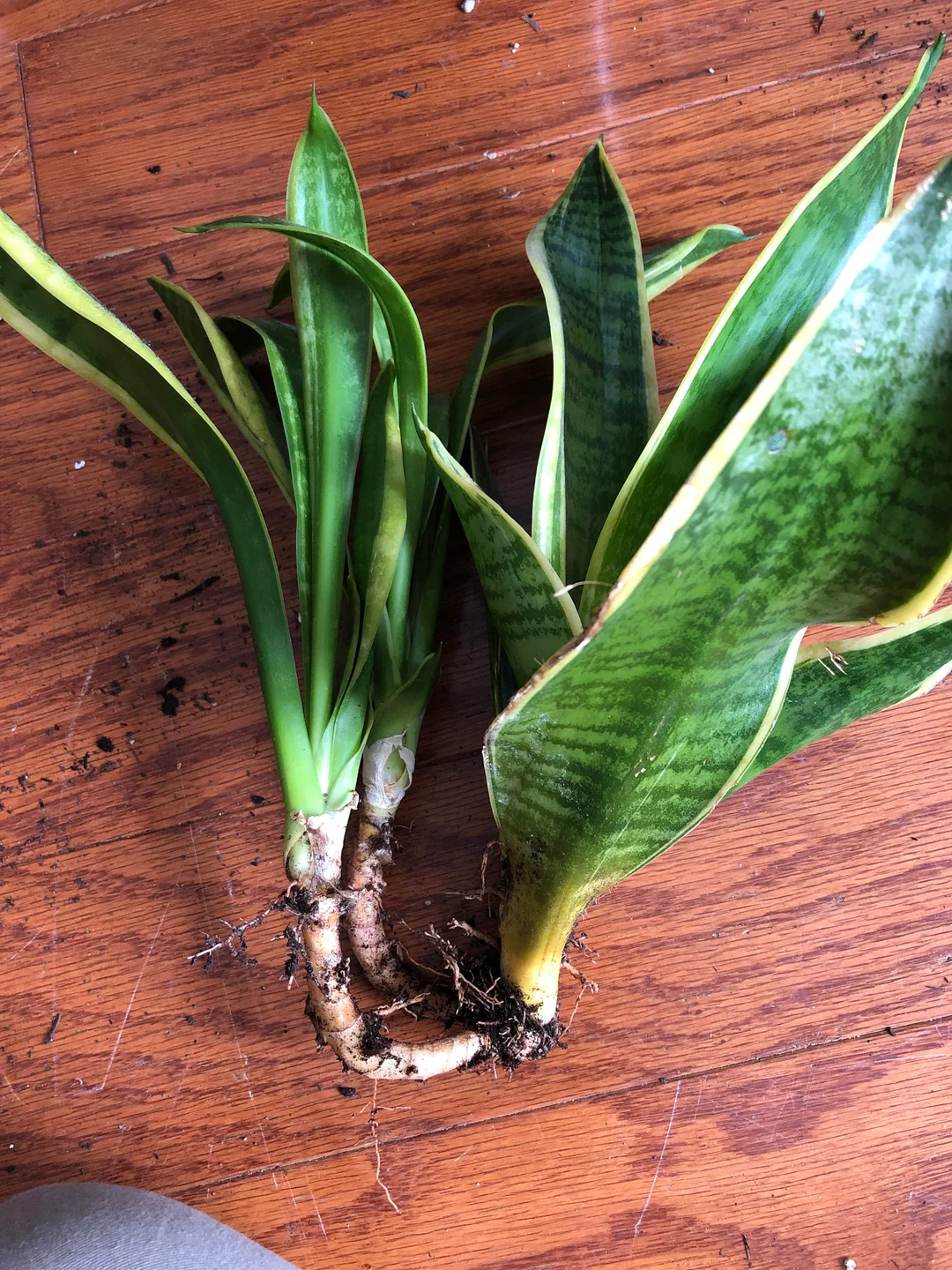
Snake plant roots are thick and fleshy, so they bruise and tear easily. Work with your fingers rather than tools, tease the outer edge loose, and leave the center of a tight root mass intact. You do not need to remove all the old soil, and gently loosening the outside is enough.
Trim only roots that are black, mushy, or smell sour. If you find several, read our guide to root rot in indoor plants before replanting.
Can You Divide a Snake Plant While Repotting?
Yes. Repotting is a natural time to divide a large clump if you also want new plants. The New York Botanical Garden advises separating plantlets once they are several inches tall and have their own roots, and each division will want to be snug in its own pot.
What Mistakes Should You Avoid?
- Choosing a pot several sizes too large: extra soil stays wet and invites rot, so it does not save time later.
- Watering immediately: give the roots about a week to settle first.
- Pulling by the leaves: this can tear them at the base, so lift from the base of the plant.
- Repotting in deep winter: dormant plants recover slowly, so wait unless the plant is in distress.
How Do You Care for the Plant After Repotting?
After the first week, water using our simple soil check method and keep the plant in bright, indirect light. Mild drooping for a week or two is normal while roots adjust. For other houseplants, our guide on how to repot indoor plants covers the general steps, and the Plant Care category has more.
Frequently Asked Questions
How often do snake plants need repotting?
Roughly every 2 to 5 years, or whenever roots become visibly crowded. Snake plants actually prefer being slightly root bound.
Is it normal for a snake plant to look stressed after repotting?
Mild drooping for a week or two is normal as roots adjust. Ongoing yellowing or wilting suggests overwatering afterward.
Can I split a plant while repotting?
Yes. Repotting is a natural time to divide a large clump if you also want new plants.
What is the best season to repot a snake plant?
Spring or early summer, during active growth, so the plant recovers faster.
Do I need to remove all the old soil when repotting?
No. Gently loosening the outer soil is enough, and you do not need to bare root the plant.

Sophie Bennett
Sophie Bennett is a Plant lover, chronic propagator, and firm believer that every room needs at least one Monstera. She writes about plant care, styling, and the joy of bringing the outdoors in keeping it honest, simple, and always beginner friendly.
Sophie Bennett
Sophie Bennett is a Plant lover, chronic propagator, and firm believer that every room needs at least one Monstera. She writes about plant care, styling, and the joy of bringing the outdoors in keeping it honest, simple, and always beginner friendly.
Get more inspiration
Subscribe for weekly plant care tips, grow guides, and fresh inspiration delivered straight to your inbox.