
Rubber Plant Dropping Leaves? 7 Causes and Easy Fixes
If you notice your rubber plant dropping leaves, don’t panic. Leaf drop is usually your plant’s way of responding to stress, and the cause may be something as simple as inconsistent watering, sudden changes in light, or temperature fluctuations. This guide explains the 7 most common reasons rubber plants lose leaves and what you can do to help yours recover.
Rubber Plant Dropping Leaves? Here’s What’s Wrong
Few things are more frustrating than seeing perfectly healthy-looking leaves suddenly fall from your Rubber Plant. One day your plant looks full and glossy, and the next, there’s a pile of leaves around the pot.
If you’re dealing with rubber plant dropping leaves, the first thing to know is that leaf drop doesn’t automatically mean your plant is dying. Rubber Plants, also known as Ficus elastica, can be sensitive to changes in their environment. Even a plant that has been growing well for months can suddenly react when its light, watering, temperature, or location changes.
The tricky part is that several different problems can cause similar symptoms. Overwatering and underwatering, for example, can both lead to leaf loss. So can too little light, cold drafts, root problems, or a sudden change in location. Instead of immediately watering more or moving your plant to a new window, it’s better to look at the complete picture. When did the leaf drop begin? Are the leaves yellow, brown, soft, or simply falling while still green? Is the soil wet or dry?
These clues can help you identify what your Rubber Plant is actually trying to tell you.
7 Reasons Your Rubber Plant Is Dropping Leaves
Rather than treating every falling leaf the same way, look at the condition of the leaves and soil. The pattern of the problem often points directly to the cause.
1. You’re Overwatering Your Rubber Plant
Overwatering is one of the most common reasons a Rubber Plant begins losing leaves.
It’s easy to assume that a tropical-looking plant needs lots of water, but Rubber Plants don’t want their roots sitting in constantly wet soil. When the soil stays saturated for too long, the roots struggle to receive enough oxygen. Over time, they can become damaged or develop root rot.
This can cause leaves to turn yellow before falling. In more serious cases, the leaves may become soft, the stems may weaken, and the soil may remain wet for days.
What to Do
Check the soil before watering rather than following a fixed schedule. Allow the upper portion of the soil to dry before watering thoroughly. Make sure the container has drainage holes and never allow the pot to sit in a saucer filled with standing water. If the soil smells unpleasant or remains wet for an unusually long time, inspect the roots. Healthy roots should generally be firm rather than mushy or dark and deteriorating.
2. Your Plant Is Too Dry
Although overwatering is common, underwatering can also cause rubber plant dropping leaves.
If the soil becomes completely dry for extended periods, the plant may struggle to move enough water to its leaves. The foliage can become limp, dry, or curled before eventually dropping.
Look at the soil as well as the leaves. If the pot feels unusually light and the soil has pulled away from the sides of the container, your plant may be seriously dehydrated.
The solution isn’t to flood the plant repeatedly. Instead, water slowly and thoroughly until excess water begins draining from the bottom. Going forward, check the soil regularly and establish a more consistent watering routine based on your home’s light, temperature, and humidity.
3. It Isn’t Getting Enough Light
Rubber Plants can tolerate some lower-light conditions, but prolonged lack of light can weaken growth and contribute to leaf loss.
If your plant is sitting in a dark corner far from a window, it may not be receiving enough energy to maintain its existing foliage.
You may also notice:
- Slow or stopped growth
- Smaller new leaves
- Long spaces between leaves
- Pale-looking foliage
- Leaves dropping from the lower portion of the plant
Move your Rubber Plant gradually toward a brighter location with plenty of indirect light.
An east-facing window is often a good option. If you’re using a very bright south- or west-facing window, protect the plant from intense direct afternoon sunlight with a sheer curtain or place it farther from the glass.
4. The Temperature Changed Suddenly
Rubber Plants don’t appreciate sudden environmental changes.
A plant that was perfectly healthy in one location can begin dropping leaves after being placed next to an air conditioner, heater, cold window, or drafty doorway.
Cold temperatures can be especially stressful. Try to keep your Rubber Plant in a warm, stable indoor environment and away from direct blasts of heating or cooling. If you recently moved the plant, some leaf drop may simply be a response to the change. Give it time to adjust instead of moving it repeatedly.
5. Your Rubber Plant Is Stressed After a Move or Repotting
Sometimes the cause is simply recent change.
Moving your Rubber Plant from one room to another changes its light, temperature, humidity, and airflow. Repotting can also disturb the roots and temporarily interrupt normal growth. A small amount of leaf drop after a significant environmental change isn’t necessarily a disaster.
The best thing you can do is provide stable conditions. Give the plant suitable indirect light, avoid excessive watering, and resist the urge to keep changing its location. Once it adjusts, new growth can gradually resume.
6. The Roots Are Having Trouble
Healthy roots are essential for maintaining healthy leaves. If the plant has been sitting in compacted soil, a pot without adequate drainage, or consistently wet conditions, the root system may become stressed. A severely root-bound plant can also struggle to absorb water and nutrients effectively.
Check for signs such as:
- Roots growing heavily around the pot
- Roots emerging from drainage holes
- Soil that dries extremely quickly
- Persistent yellowing
- Stunted growth
If the plant is severely root-bound or the soil has broken down and become compacted, repot it into fresh, well-draining soil and a container only slightly larger than the existing one. Avoid jumping into repotting at the first fallen leaf, though. Unnecessary repotting can create additional stress.
7. Pests Are Damaging the Plant
If your Rubber Plant is dropping leaves and you notice tiny insects, sticky residue, webbing, or unusual marks on the foliage, pests may be involved.
Common indoor pests include spider mites, scale, mealybugs, and aphids. Inspect both sides of the leaves, along the stems, and around new growth. If you find pests, isolate the plant from other houseplants and treat the infestation using an appropriate houseplant pest-control method. Early detection makes the problem much easier to manage.
Quick Diagnosis: Why Is Your Rubber Plant Losing Leaves?
| What You Notice | Possible Cause | What to Check |
|---|---|---|
| Yellow leaves falling | Overwatering | Wet soil and drainage |
| Dry, crispy leaves | Underwatering | Dry soil and root moisture |
| Lower leaves dropping | Low light or natural aging | Light levels and new growth |
| Green leaves suddenly falling | Environmental stress | Recent move or temperature change |
| Soft leaves and wet soil | Root problems | Roots and drainage |
| Sticky leaves or webbing | Pests | Undersides of leaves and stems |
| Leaf drop after repotting | Transplant stress | Recent root disturbance |
How to Stop Your Rubber Plant From Dropping More Leaves
Once you’ve identified the likely cause, the most important thing is to stop reacting to every individual leaf and start improving the plant’s overall environment.
Rubber Plants respond best to consistency. If you notice a few leaves falling, don’t immediately water the plant, move it to a sunny window, add fertilizer, and repot it all on the same day. That combination can create even more stress and make it impossible to know what caused the original problem.
Start with the soil.
Push your finger into the top portion of the potting mix and determine whether it’s wet, slightly moist, or completely dry. This simple check can tell you much more than a watering calendar. Indoor plant conditions vary considerably, so your Rubber Plant may need water more frequently during bright, warm months and much less during winter.
Next, consider the lighting. A Rubber Plant needs enough light to maintain strong foliage and produce new growth. Bright indirect light is generally ideal. If the plant has been sitting in a dim corner, gradually move it closer to a suitable window rather than suddenly placing it in intense direct sunlight. Temperature is another factor that’s easy to overlook. Check whether the plant is sitting beside an air conditioner, radiator, heater, or drafty window. Even if the room itself feels comfortable, direct exposure to hot or cold air can create stressful conditions around the foliage.
Pay attention to the leaves you’re losing, too. An occasional older lower leaf turning yellow and falling isn’t necessarily concerning. Plants naturally shed older foliage as they grow. The situation becomes more concerning when multiple healthy leaves drop rapidly or when leaf loss is accompanied by yellowing, soft stems, persistent wet soil, pests, or a sudden decline in new growth.
Don’t fertilize a stressed plant simply because you want it to recover faster. Fertilizer isn’t medicine. If the roots are damaged or the plant is struggling because of overwatering, adding more nutrients can make the situation worse.
Instead, fix the environmental problem first.
If root damage is suspected, carefully inspect the root system. Remove obviously damaged roots with clean tools and repot the plant in fresh, well-draining soil if necessary. Give it time to recover before introducing a regular feeding routine.
And remember that damaged leaves won’t repair themselves. A yellow or brown leaf will not suddenly become green again after you fix the care problem. Your goal is to protect the healthy leaves and encourage new growth.
With stable conditions, many Rubber Plants gradually recover. You may not see immediate improvement, but new leaves are one of the best signs that your plant is getting back on track.
Should You Remove Fallen or Damaged Leaves?
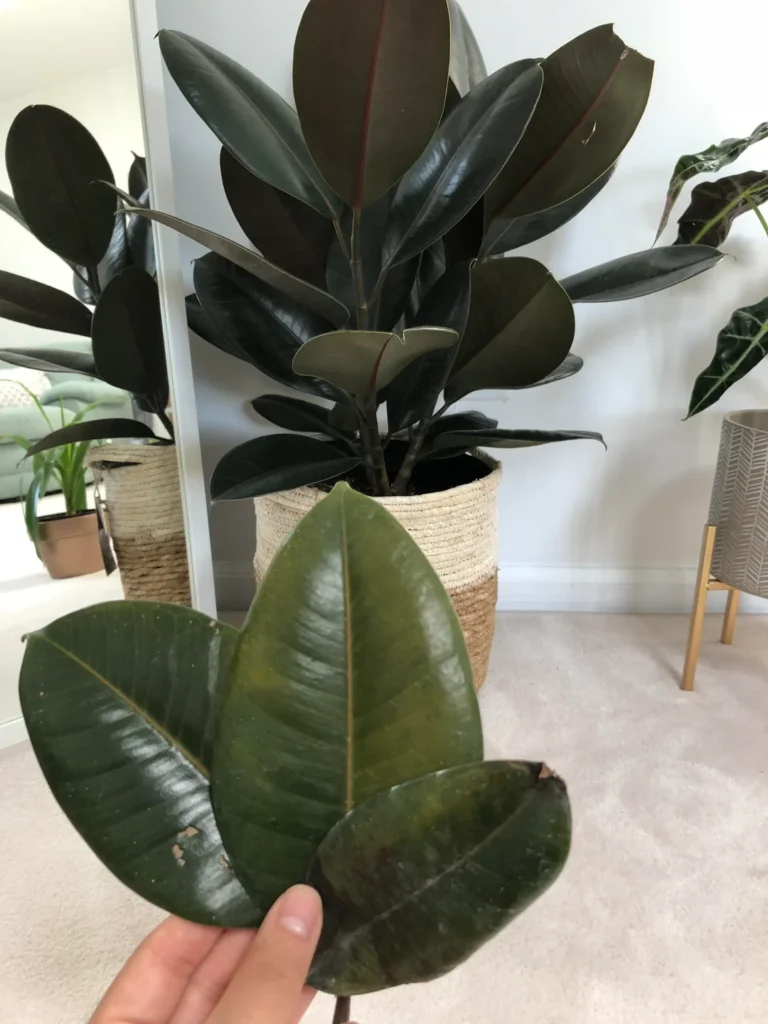
You don’t need to remove every leaf the moment it begins turning yellow.
If a leaf is only slightly damaged, you can leave it attached while you investigate the cause. The plant may still be able to use some of the resources stored in the leaf.
Once a leaf has become completely yellow, brown, damaged, or dead, you can remove it with clean scissors or pruning shears.
Always avoid aggressively pruning healthy foliage simply because you’re worried about leaf drop.
The goal is to reduce unnecessary stress while allowing the Rubber Plant to maintain as much healthy foliage as possible.
How Long Does It Take for a Rubber Plant to Recover?
Recovery time depends entirely on the cause and severity of the problem.
If your Rubber Plant was simply experiencing a small environmental change, it may stabilize relatively quickly after conditions become consistent.
More serious issues, such as root damage or prolonged underwatering, can take considerably longer.
Don’t judge recovery by whether the old leaves become green again. Instead, watch for healthier signs:
- No sudden increase in leaf drop
- Firm stems
- Healthy new leaves
- Stable soil moisture
- New growth appearing
- No visible pest activity
New growth is particularly encouraging because it shows that the plant has enough energy to continue developing.
Frequently Asked Questions
Why is my Rubber Plant suddenly dropping leaves?
Sudden leaf drop can result from overwatering, underwatering, low light, temperature changes, drafts, repotting stress, or pests. Look at the soil and recent environmental changes to identify the most likely cause.
Can overwatering cause Rubber Plant leaves to fall?
Yes. Constantly wet soil can damage the roots and eventually cause yellow leaves, wilting, and leaf drop.
Should I water my Rubber Plant when the leaves are falling?
Not automatically. Check the soil first. If it’s already wet, adding more water can make the problem worse.
Why are green leaves falling from my Rubber Plant?
Green leaves dropping suddenly can indicate environmental stress, temperature changes, root problems, or watering issues. A recent move can also trigger temporary leaf loss.
How much light does a Rubber Plant need?
Rubber Plants generally grow best in bright, indirect light. They can tolerate lower light, but prolonged darkness may result in slower growth and weaker foliage.
Can a Rubber Plant recover after losing many leaves?
Yes, Rubber Plants can recover if the underlying problem is corrected and the remaining roots and stems are healthy. Recovery may take time.
Should I mist my Rubber Plant?
Misting isn’t essential. Maintaining appropriate watering, good light, and stable humidity is more important for overall plant health.
How do I know if my Rubber Plant has root rot?
Persistent wet soil, yellowing leaves, wilting despite wet soil, unpleasant soil odor, and dark or mushy roots can indicate root problems.
Should I fertilize a Rubber Plant that is losing leaves?
It’s usually better to identify and correct the cause of leaf drop first. Fertilizer won’t fix problems caused by overwatering, poor light, or root damage.
Final Thoughts
Seeing your Rubber Plant lose leaves can be alarming, especially when you’ve been doing your best to keep it healthy. But rubber plant dropping leaves doesn’t always mean your plant is dying. In many cases, it’s simply responding to a change in its environment.
Start by looking at the basics: soil moisture, light, temperature, drainage, and recent changes in location. These factors account for many of the problems indoor Rubber Plants experience.
Avoid the temptation to fix everything at once. If the soil is wet, don’t add more water. If the plant is in darkness, gradually improve its light. If you’ve recently repotted it, give the roots time to settle. And if you find pests, address them before they spread.
Most importantly, pay attention to new growth. Old damaged leaves cannot become healthy again, but new leaves can tell you whether your care changes are working.
A healthy Rubber Plant doesn’t need constant attention or complicated routines. It needs a stable environment, appropriate moisture, good drainage, sufficient light, and a little patience.
Once you identify what’s causing the leaf drop and correct the underlying issue, your plant can gradually return to producing the large, glossy leaves that make Rubber Plants such popular indoor favorites.
Fix the environment, give your Rubber Plant time to recover, and let healthy new growth tell you you’re back on the right track.

Sophie Bennett
Sophie Bennett is a Plant lover, chronic propagator, and firm believer that every room needs at least one Monstera. She writes about plant care, styling, and the joy of bringing the outdoors in keeping it honest, simple, and always beginner friendly.
Sophie Bennett
Sophie Bennett is a Plant lover, chronic propagator, and firm believer that every room needs at least one Monstera. She writes about plant care, styling, and the joy of bringing the outdoors in keeping it honest, simple, and always beginner friendly.
Get more inspiration
Subscribe for weekly plant care tips, grow guides, and fresh inspiration delivered straight to your inbox.