
Succulent Stretching: What Your Plant Is Trying to Tell You
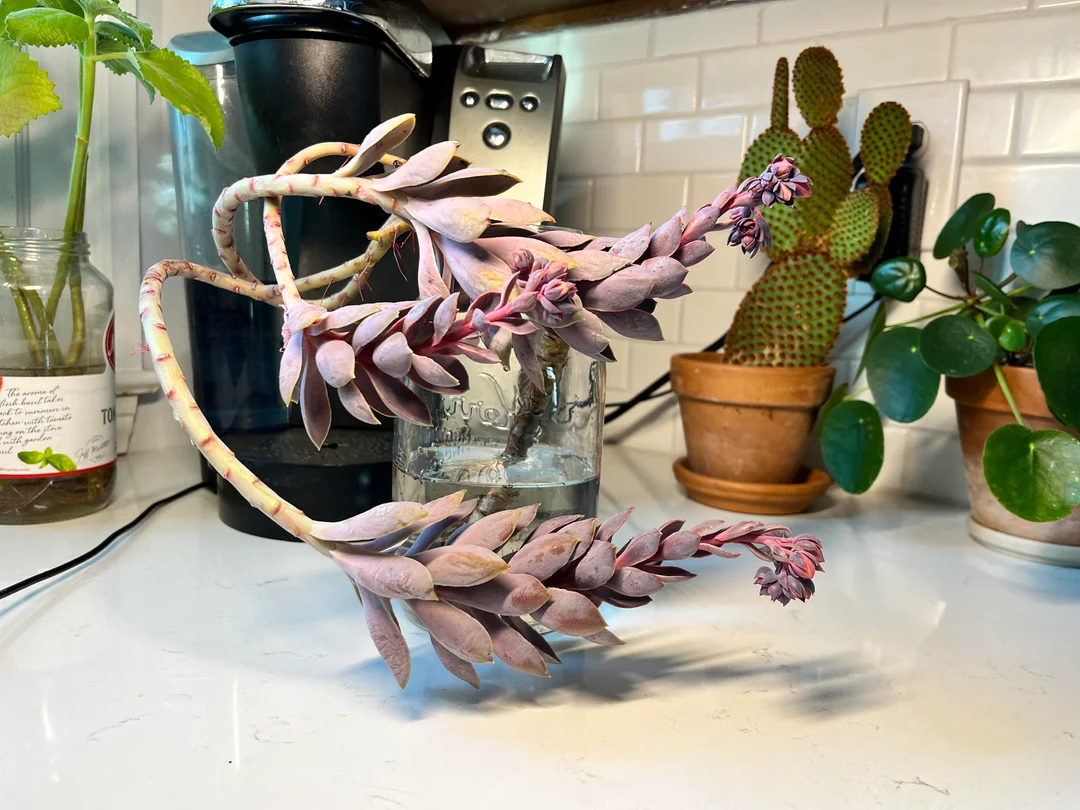
Noticing succulent stretching and wondering what went wrong? The good news is that stretching, also known as etiolation, is one of the easiest succulent problems to identify and fix. In this guide, you’ll learn why succulent stretching happens, how to stop it, and the best ways to restore healthy, compact growth.
Have you ever looked at your succulent and noticed that it suddenly seems taller, thinner, or less compact than before? Maybe the leaves are spreading farther apart, the stem looks elongated, or the plant appears to be leaning toward a nearby window. If so, you’re likely dealing with succulent stretching, a common condition known as etiolation.
While etiolation may look alarming, it’s actually your plant’s natural response to insufficient light. Unlike pests or diseases, succulent stretching isn’t usually a sign that your plant is dying. Instead, it’s your succulent’s way of searching for better growing conditions.
The good news is that once you understand what’s causing the problem, you can take steps to stop further stretching and encourage healthier growth. Let’s break down exactly why succulent stretching occurs and what you can do about it.
What Is Succulent Stretching?
Succulent stretching, also known as etiolation, occurs when a succulent doesn’t receive enough light to maintain its compact shape. In response, the plant begins growing upward or toward the nearest light source in an attempt to capture more sunlight.
As this happens, the stem elongates, leaves become more widely spaced, and the plant loses its tight, attractive appearance.
Common Signs of Succulent Stretching
- Long, stretched stems
- Increased spacing between leaves
- Leaning toward a window or light source
- Pale or lighter-colored growth
- Rosettes opening and becoming loose
- Weak or floppy stems
Recognizing these signs early makes it easier to correct the problem before the plant becomes severely stretched.
Why Does Succulent Stretching Happen?
The primary cause of succulent stretching is inadequate light.
Most succulents originate from sunny, arid environments where they receive several hours of bright sunlight every day. When grown indoors, they often receive far less light than they need.
Without sufficient light, the plant redirects its energy into reaching upward instead of maintaining compact growth.
The Science Behind Etiolation
Plants rely on sunlight to fuel photosynthesis. When light levels drop, growth hormones signal the plant to extend its stems in search of brighter conditions.
This survival mechanism helps plants find light in nature but often creates unattractive growth indoors.
Simply put, your succulent is trying to save itself.
Types of Succulents Most Prone to Stretching
While almost any succulent can become etiolated, some species are more susceptible than others.
Common examples include:
- Echeveria
- Graptopetalum
- Sedum
- Crassula
- Aeonium
- Kalanchoe
Rosette-forming succulents tend to show stretching more dramatically because their normally compact shape becomes distorted.
How Much Light Do Succulents Actually Need?
One of the biggest misconceptions about succulents is that they can thrive in any bright room.
Most succulents require:
- 4–6 hours of direct sunlight daily
- Bright indirect light throughout the day
- South-facing windows whenever possible
Indoor lighting often appears brighter to humans than it does to plants.
If your succulent sits several feet away from a window, it may not be receiving enough usable light.
Signs Your Succulent Needs More Light
Before severe succulent stretching occurs, your plant may display several warning signs.
Leaning Toward Light
A succulent that constantly bends toward a window is actively searching for more sunlight.
Loss of Vibrant Color
Many succulents lose their rich coloration when light levels decrease.
Slower Growth
Insufficient light can slow overall development.
Open Rosettes
Compact rosette varieties begin spreading apart as they stretch.
If you notice these changes, increasing light exposure can often prevent further etiolation.
Can Succulent Stretching Be Reversed?
This is one of the most common questions succulent owners ask.
Unfortunately, stretched plant growth cannot return to its original compact form.
Once a stem elongates, it remains elongated.
However, you can stop future stretching and encourage healthier new growth.
The goal is to correct the growing conditions before the problem becomes worse.
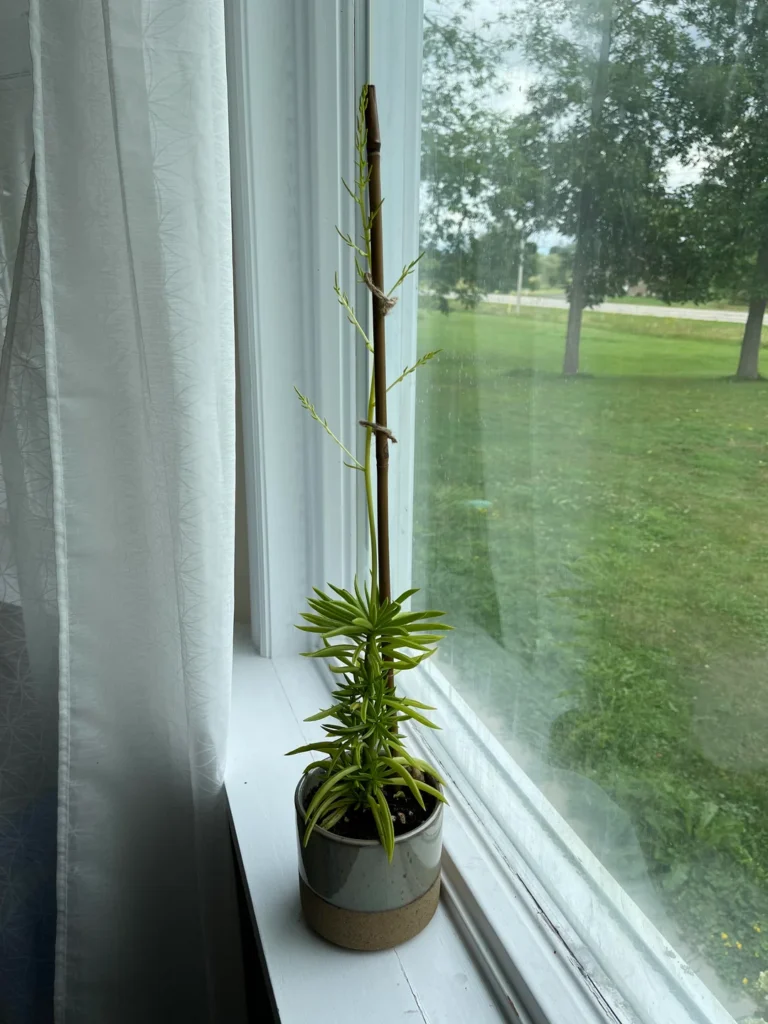
How to Fix Succulent Stretching
Fortunately, fixing succulent stretching is relatively straightforward.
1. Move Your Plant to a Brighter Location
The most effective solution is increasing light exposure.
Ideal locations include:
- South-facing windows
- Bright east-facing windows
- Outdoor patios with filtered sunlight
Avoid moving the plant from deep shade directly into intense sunlight, as this can cause sunburn.
2. Rotate the Pot Weekly
Rotating your succulent helps ensure even light exposure.
This prevents the plant from leaning toward one side.
3. Use Grow Lights
If natural light is limited, grow lights can be an excellent solution.
Many indoor gardeners successfully prevent succulent stretching using full-spectrum LED grow lights.
4. Gradually Increase Sun Exposure
Sudden exposure to intense sunlight may damage leaves.
Instead, increase light levels gradually over several days.
What to Do With Severely Stretched Succulents
If your succulent has already become extremely elongated, pruning and propagation may be the best option.
Beheading Method
Many rosette succulents can be rejuvenated through a technique called beheading.
Here’s how:
- Use clean scissors or pruning shears.
- Cut the rosette from the stretched stem.
- Allow the cut end to callous for several days.
- Replant in well-draining succulent soil.
- Place in bright light.
Over time, new roots will develop and the rosette will regain a healthier appearance.
Meanwhile, the original stem often produces new offsets.
Environmental Factors That Contribute to Succulent Stretching
While inadequate light is the primary cause, other factors can influence growth patterns.
Environmental Factors That Increase the Risk of Succulent Stretching
| Factor | Higher Risk of Stretching | Lower Risk of Stretching |
| Light Exposure | Dim indoor lighting | Bright direct sunlight |
| Season | Winter months | Spring and summer |
| Window Direction | North-facing windows | South-facing windows |
| Plant Placement | Far from windows | Close to bright windows |
| Indoor Lighting | Standard room lighting | Full-spectrum grow lights |
Understanding these factors helps you create a healthier growing environment.
Common Mistakes That Cause Succulent Stretching
Many plant owners unintentionally encourage etiolation through simple care mistakes.
Keeping Succulents Too Far From Windows
Light intensity drops dramatically even a few feet from a window.
Assuming All Succulents Like Shade
Most succulents need far more sunlight than people realize.
Ignoring Seasonal Changes
Winter often brings lower light levels and shorter days.
Not Rotating Plants
Uneven light exposure can cause leaning and uneven growth.
Avoiding these mistakes can significantly reduce the risk of future stretching.
How to Prevent Succulent Stretching in the Future
Preventing succulent stretching is much easier than correcting it.
Follow these simple guidelines:
- Provide 4–6 hours of sunlight daily.
- Use grow lights when necessary.
- Rotate plants regularly.
- Monitor growth patterns.
- Adjust placement seasonally.
- Avoid dark corners and low-light rooms.
Healthy succulents should remain compact, colorful, and balanced.
How to Tell If Your Succulent Is Recovering
After improving light conditions, recovery doesn’t happen overnight.
Look for these positive signs:
- New growth appears compact.
- Leaves become closer together.
- Colors become more vibrant.
- Growth becomes upright and balanced.
Remember that old stretched growth won’t shrink, but healthy new growth is a sign you’re moving in the right direction.
Frequently Asked Questions
Is Succulent Stretching Bad?
While it’s not immediately harmful, stretching indicates that your plant isn’t receiving enough light and should be corrected.
Can I Save a Stretched Succulent?
Yes. Improving light conditions and propagating severely stretched plants can restore a healthier appearance.
Do Grow Lights Really Work?
Absolutely. Quality full-spectrum grow lights can effectively prevent succulent stretching indoors.
How Long Does It Take to See Improvement?
Most succulents begin producing healthier growth within a few weeks after receiving adequate light.
Understanding Succulent Stretching Before It Gets Worse
The earlier you recognize succulent stretching, the easier it is to fix. Many plant owners assume their succulent is simply growing taller, when in reality the plant is signaling that it needs more light. Paying attention to subtle changes, such as widening leaf gaps, fading colors, or slight leaning, allows you to address the issue before it becomes severe.
The good news is that succulents are remarkably resilient. Even if your plant has already stretched significantly, improving its lighting conditions can stop further etiolation and encourage stronger growth moving forward. With proper placement, consistent light exposure, and occasional maintenance, you can help your succulent regain its beauty and prevent future stretching issues.
Ready to Save Your Stretched Succulent?
Succulent stretching is one of the most common challenges indoor plant owners face, but it’s also one of the easiest to understand and correct. In most cases, the problem comes down to insufficient light rather than disease, pests, or poor plant health.
By recognizing the early signs of succulent stretching, increasing light exposure, and making a few simple care adjustments, you can stop etiolation and encourage healthier growth. Whether you’re growing succulents on a sunny windowsill or using grow lights indoors, providing the right amount of light is the key to keeping your plants compact, colorful, and thriving for years to come.

Sophie Bennett
Sophie Bennett is a Plant lover, chronic propagator, and firm believer that every room needs at least one Monstera. She writes about plant care, styling, and the joy of bringing the outdoors in keeping it honest, simple, and always beginner friendly.
Sophie Bennett
Sophie Bennett is a Plant lover, chronic propagator, and firm believer that every room needs at least one Monstera. She writes about plant care, styling, and the joy of bringing the outdoors in keeping it honest, simple, and always beginner friendly.
Get more inspiration
Subscribe for weekly plant care tips, grow guides, and fresh inspiration delivered straight to your inbox.